Comprehensive analysis of mobile phone price increases in India and globally from 2020-2026. Features 50+ data points covering global and India price trends, component cost breakdowns, inflation impact, brand-wise analysis, 5G premium, supply chain disruptions, consumer behavior, and future projections. Based on data from Counterpoint Research, IDC, CMR, and government statistics.
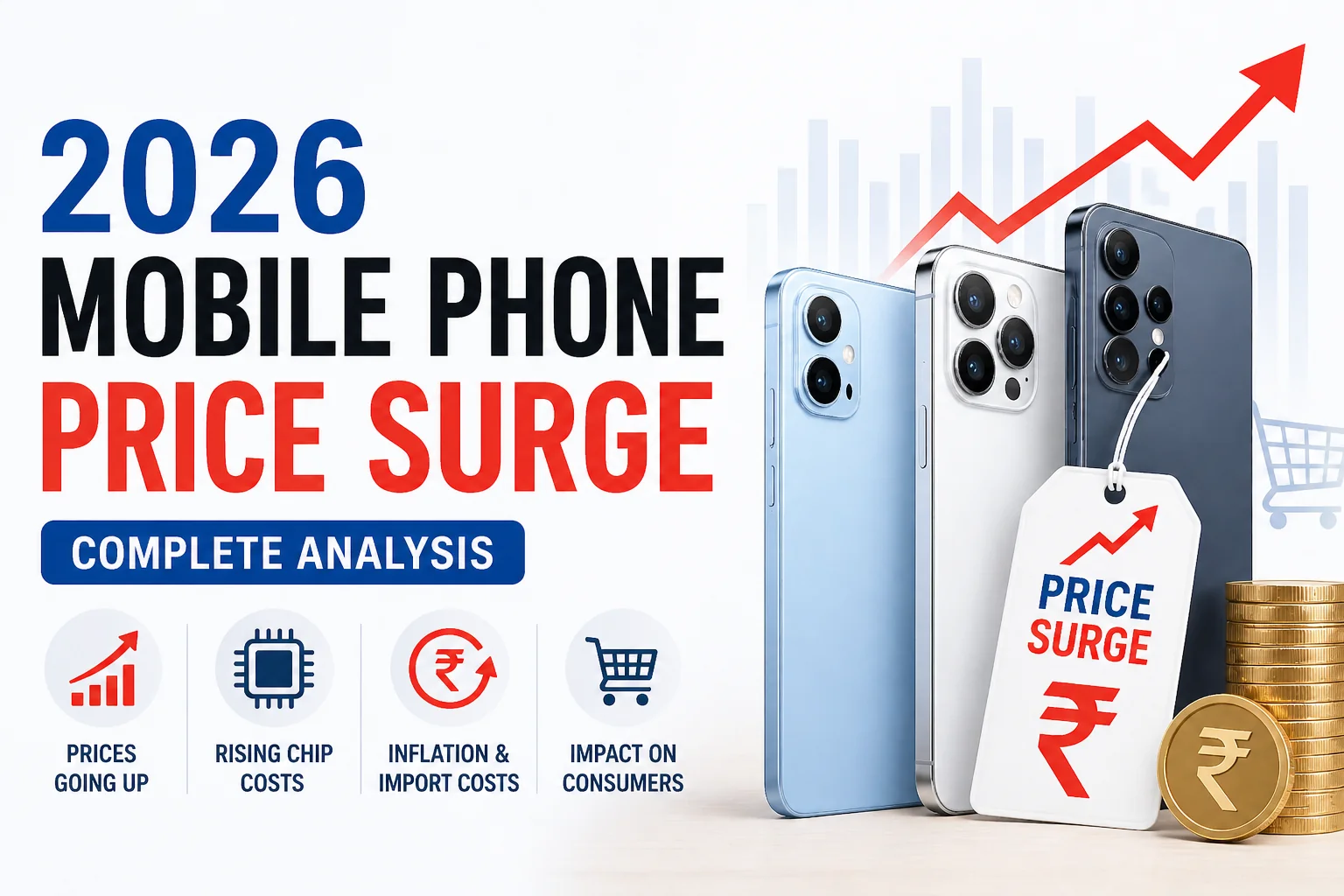
Between 2020 and 2026, we've seen smartphone prices shoot up like never before - and India has been hit particularly hard. The 2026 price surge isn't temporary—it's driven by structural changes in the tech supply chain, especially AI-driven memory demand. I've dug into the numbers to understand what's driving this price inflation, looking at everything from the memory chip crisis and rising production costs to how brands are passing these costs to consumers. Using data from Counterpoint Research, IDC, CMR, Gartner, and various government statistics, this article breaks down the key factors reshaping the smartphone market toward higher prices, fewer budget options, and longer replacement cycles. For more insights on mobile technology, check out our mobile and mobile phones categories.
The global smartphone market has seen prices climb across the board, driven by a bunch of macroeconomic and supply chain factors:
Looking at global smartphone pricing trends, we can see a steady upward trajectory:
| Year | Average Selling Price ($) |
|---|---|
| 2020 | 280 |
| 2021 | 295 |
| 2022 | 320 |
| 2023 | 345 |
| 2024 | 360 |
| 2025 | 370 |
| 2026 (Proj) | 380 |
Global Price Trend Analysis:
India's smartphone market
The Indian market has seen even more pronounced price increases:
| Year | Average Selling Price (₹) |
|---|---|
| 2020 | 15,000 |
| 2021 | 16,800 |
| 2022 | 18,900 |
| 2023 | 20,500 |
| 2024 | 22,200 |
| 2025 | 23,400 |
| 2026 (Proj) | 24,500 |
India Market Segmentation:
The main driver behind the 2026 price surge is a global shortage of memory chips (DRAM & NAND). AI companies are consuming massive amounts of advanced memory for data centers, reducing supply for smartphones and sharply increasing component costs:
| Component | Cost Increase (%) | Primary Driver |
|---|---|---|
| Memory (DRAM/NAND) | 52 | AI-driven demand from data centers |
| Display | 49 | Supply constraints, OLED shortage |
| SoC | 44 | Semiconductor shortage |
| Camera | 44 | Higher megapixel demand |
| 5G Modem | 50 | 5G technology premium |
| Battery | 33 | Raw material costs |
| Chassis | 33 | Premium materials (glass, titanium) |
| Other | 41 | Various supply chain factors |
Component Cost Drivers:
Global inflation and currency fluctuations have played a big role in driving up smartphone prices:
| Region | 2020 Exchange Rate | 2026 Exchange Rate | Currency Depreciation | Inflation (Cumulative) | Price Impact |
|---|---|---|---|---|---|
| India (USD/INR) | 74.5 | 83.5 | -12.1% | 28% | High |
| Brazil (USD/BRL) | 5.2 | 5.8 | -11.5% | 35% | Very High |
| Turkey (USD/TRY) | 7.0 | 32.0 | -78% | 185% | Extreme |
| UK (USD/GBP) | 0.76 | 0.82 | -7.9% | 22% | Moderate |
| EU (USD/EUR) | 0.82 | 0.92 | -12.2% | 24% | High |
| Japan (USD/JPY) | 104 | 150 | -44% | 12% | High |
Inflation Impact by Category:
Different smartphone brands have raised prices at different rates, depending on their positioning and cost structures:
| Brand | Price Increase (%) |
|---|---|
| Samsung | 51 |
| Apple | 26 |
| Xiaomi | 54 |
| Realme | 48 |
| Vivo | 54 |
| Oppo | 48 |
| OnePlus | 50 |
| Google Pixel | 29 |
Brand Strategy Shifts:
Moving to 5G technology has added significant costs to smartphones:
| Price Segment | 4G Avg Price (₹) | 5G Avg Price (₹) | 5G Premium | 5G Share (2026) | Key 5G Features |
|---|---|---|---|---|---|
| Budget (<₹15,000) | 10,500 | 13,500 | +29% | 65% | Basic 5G, 48MP |
| Mid-range (₹15,000-₹25,000) | 18,000 | 23,000 | +28% | 82% | 5G, 108MP, AMOLED |
| Premium (₹25,000-₹40,000) | 30,000 | 38,000 | +27% | 95% | 5G, 4K, 120Hz |
| Ultra-premium (>₹40,000) | 55,000 | 72,000 | +31% | 100% | 5G, AI, Foldable |
5G Cost Components:
Several supply chain disruptions have contributed to the price hikes:
| Disruption | Period | Duration | Components Affected | Price Impact | Recovery Status |
|---|---|---|---|---|---|
| COVID-19 Factory Shutdowns | 2020-2021 | 12 months | All components | +15-20% | Recovered |
| Semiconductor Shortage | 2021-2023 | 24 months | Chips, displays | +25-35% | Improving |
| Russia-Ukraine War | 2022-2026 | Ongoing | Neon, palladium | +8-12% | Partial |
| China Zero-COVID Policy | 2022-2023 | 18 months | Assembly, logistics | +10-15% | Resolved |
| Red Sea Shipping Crisis | 2023-2024 | 8 months | Logistics | +5-8% | Resolved |
| US-China Tech War | 2020-2026 | Ongoing | Advanced chips | +12-18% | Ongoing |
Geopolitical Impact Analysis:
Changes in how people buy phones have influenced pricing strategies:
| Metric | 2020 | 2022 | 2024 | 2026 (Proj) | Trend |
|---|---|---|---|---|---|
| Avg Replacement Cycle (Months) | 24 | 28 | 32 | 36 | Increasing |
| Trade-in Adoption | 8% | 15% | 22% | 28% | Rising |
| EMI Purchase % | 25% | 35% | 42% | 48% | Rising |
| Premium Intent % | 18% | 24% | 30% | 35% | Rising |
| Refurbished Market Share | 5% | 8% | 12% | 16% | Rising |
Consumer Insights:
For more technology insights and market analysis, explore our tech news and technology sections.
The 2026 price surge isn't temporary—it's driven by structural changes in the tech supply chain, especially AI-driven memory demand. Price trends should start to stabilize, but the industry is undergoing a permanent shift:
| Year | Global ASP ($) | India ASP (₹) | YoY Change | Key Factors |
|---|---|---|---|---|
| 2027 (Proj) | 390 | 25,200 | +2.6% | Supply chain normalization |
| 2028 (Proj) | 395 | 25,800 | +1.3% | Component cost reduction |
| 2029 (Proj) | 400 | 26,400 | +1.3% | Manufacturing efficiency |
| 2030 (Proj) | 405 | 27,000 | +1.3% | AI integration costs |
Future Price Drivers:
I pulled together data from several authoritative sources to get a comprehensive picture of mobile phone price trends.
Data compiled and analyzed in January 2026. Projections subject to revision as new market data becomes available.
For real-time updates and monitoring, refer to Counterpoint Research and IDC market reports.
Q1. Will mobile phone prices decrease in the future?
After 2026, price increases should slow down to 1-3% annually as supply chains normalize, but don't expect significant drops - rising component costs and premium features will keep prices elevated.
Q2. Why are budget smartphones disappearing?
Budget and mid-range phones have been hit hardest by the price surge. Rising component costs (especially memory), inflation, and the focus on higher-margin segments have made sub-₹10,000 devices increasingly unprofitable for manufacturers, leading many to discontinue budget models. Premium phones are less affected because buyers are less price-sensitive and brands have better margins and supply control.
Q3. Is 5G the main reason for price increases?
5G accounts for 25-35% of the price increases, but it's just one of several factors. The main driver is the global shortage of memory chips (DRAM & NAND) due to AI companies consuming massive amounts for data centers. Component shortages, inflation, currency depreciation, and supply chain disruptions all play a role as well.
Bottom Line:
The 2026 price surge isn't temporary—it's driven by structural changes in the tech supply chain, especially AI-driven memory demand. The smartphone industry is undergoing a permanent shift from "affordable, spec-heavy phones" to fewer, more expensive, premium-focused devices. Greater focus on AI features, software experience, and long-term value is replacing the old emphasis on raw specs. This is reshaping the smartphone market toward higher prices, fewer budget options, and longer replacement cycles. Consumers should expect this trend to continue, with budget phones becoming increasingly scarce and premium devices dominating the market.
Q4. Which brands offer the best value for money?
Brands like Xiaomi, Realme, and Samsung offer solid value in mid-range segments, while Apple and Google provide good value in premium segments through longevity and software support.
Q5. Should I buy now or wait for prices to drop?
If you need a phone urgently, current prices are stable. If you can wait 6-12 months, you might see minor price corrections as supply chains fully normalize, but don't expect significant drops.
Last Updated: April 2026 (Updated with latest market data and projections)
Disclaimer: This article is based on publicly available market data, research reports, and industry analysis from organizations such as Counterpoint Research, IDC, CMR, and other research bodies. Market projections involve uncertainty, and actual outcomes may differ. This content is intended for informational purposes only and should not be considered financial or investment advice.


Comments
Loading comments...